
India Strengthens Nuclear 'Second-Strike': INS Arihant Tests K-4 SLBM Missile

Follow @defgeopolitics on X
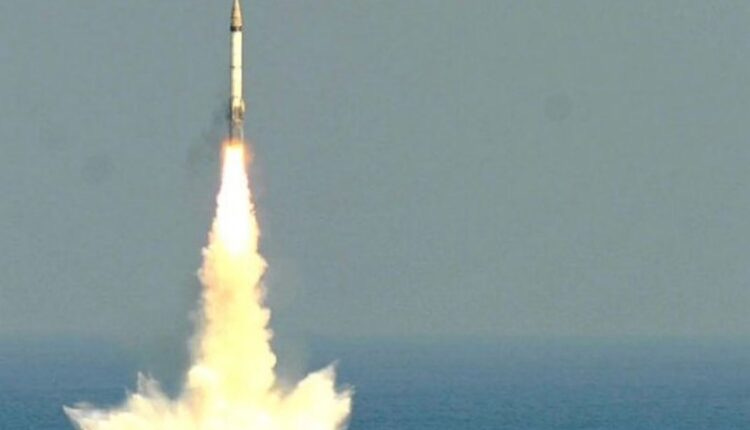
The launch of the K-4 SLBM from the nuclear-powered submarine INS Arihant confirms the maturity of India's sea-based deterrence and reshapes the strategic equation of South Asia and the Indo-Pacific.
India has crossed another critical strategic threshold in its efforts to build a viable and credible nuclear deterrent following the successful test-fire of the submarine-launched ballistic missile, K-4 (Submarine-Launched Ballistic Missile, SLBM), launched from the nuclear-powered ballistic missile submarine INS Arihant in the Bay of Bengal on December 23, 2025, a development that fundamentally strengthens New Delhi's second-strike capability while reshaping strategic calculations across South Asia and the entire Indo-Pacific maritime domain.
The launch, carried out from a concealed underwater platform operating within India's strategic eastern coastal stronghold, reflects the carefully planned maturation of the deep-sea component of India's nuclear triad and marks a clear transition from experimental deterrence to routine, fully operational and viable underwater nuclear patrols, with the ability to survive a first strike and carry out assured retaliatory responses.
With the confirmation of submarine-launched ballistic missiles with an operational range of approximately 3,500 kilometers, India has demonstrated its ability to place strategic targets deep within the Asian continent within the threat radius, while maintaining its ballistic missile submarines at a safe distance from enemy shores, thus strengthening counter-insurgency stability through survivability and concealability, rather than through open escalation.
This achievement comes against a backdrop of increasingly intense strategic competition, marked by ongoing India-China border tensions, the evolution of Pakistan's sea-denial doctrine, and the increasing militarization of the Indian Ocean, thus elevating the K-4 test from a mere technical exercise to a geopolitical signal laden with messages of strategic intent, capability, and maturity.
The stealthy nature of the operation, conducted without official announcement, is in line with India's long-standing "No First Use" doctrine and the authoritative concept of minimum resistance, where strategic signaling is carefully orchestrated to reassure allies, warn enemies, and maintain escalation control without creating unnecessary provocations.
The successful K-4 SLBM test also highlights the quiet strengthening of a command and control architecture capable of safely transmitting launch authority to strategic assets operating below the sea surface, a fundamental prerequisite for a truly credible counter-strike capability and a key differentiator between a mature nuclear power and one that is merely declarative.